
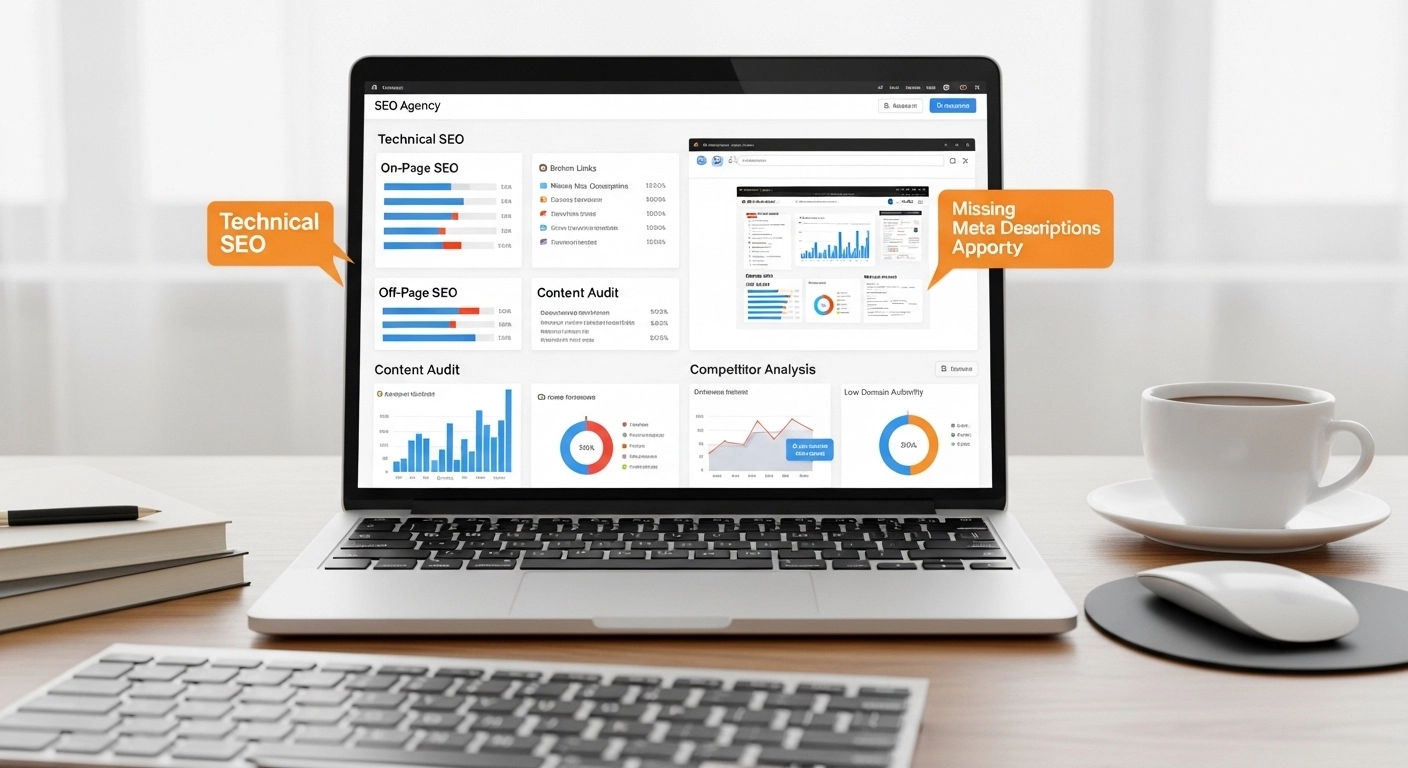
If your website isn’t ranking, converting, or driving consistent organic traffic, the problem often lies beneath the surface. A SEO agency website audit is the fastest way to uncover hidden issues, identify growth opportunities, and build a scalable SEO strategy that delivers real results.
A professional SEO audit goes beyond basic checks. It analyzes your technical SEO, content quality, backlink profile, user experience, and search intent alignment—all while leveraging data-driven insights to improve performance. Whether you’re a business owner, marketer, or agency, understanding how a website audit works can help you fix critical SEO issues and unlock higher rankings.
In this complete guide, you’ll learn how a SEO agency website audit works, what it includes, and how to use it to dominate search engine results.
What Is an SEO Agency Website Audit?
A SEO agency website audit is a comprehensive evaluation of a website’s ability to rank in search engines like Google. It identifies issues that prevent visibility and provides actionable recommendations to improve performance.
Key Components of an SEO Audit
Technical SEO Analysis
Evaluates how search engines crawl and index your site.
On-Page SEO Review
Analyzes content, keywords, and optimization elements.
Off-Page SEO Assessment
Examines backlinks, authority, and trust signals.
UX & Performance Evaluation
Focuses on user experience, page speed, and engagement metrics.
Why Your Business Needs a Professional SEO Audit
A website audit is not optional—it’s essential for sustainable growth.
Identify Hidden SEO Issues
Many SEO problems are invisible without a detailed audit, such as:
- Crawl errors
- Broken links
- Duplicate content
- Poor site structure
- Indexing issues
Improve Search Engine Rankings
Fixing audit issues leads to:
- Better keyword rankings
- Increased organic traffic
- Higher visibility in SERPs
Enhance User Experience
SEO and UX go hand in hand. Audits help improve:
- Page speed
- Mobile usability
- Navigation clarity
Complete SEO Audit Checklist (Step-by-Step)
A structured audit ensures nothing is missed.
Step 1: Technical SEO Audit
H4: Technical Audit Framework
Crawlability & Indexation
- Check robots.txt
- Analyze XML sitemaps
- Ensure proper indexing
Website Architecture
- Logical URL structure
- Internal linking optimization
- Breadcrumb navigation
Core Web Vitals
- Largest Contentful Paint (LCP)
- First Input Delay (FID)
- Cumulative Layout Shift (CLS)
HTTPS & Security
- SSL certificate validation
- Mixed content issues
Step 2: On-Page SEO Audit
H3: Content Optimization Review
Evaluate:
- Keyword targeting
- Content quality
- Search intent alignment
- Content depth
H4: On-Page SEO Checklist
- Optimize title tags and meta descriptions
- Use proper heading structure (H1–H6)
- Improve keyword placement
- Add internal links
- Optimize images (alt text, compression)
Step 3: Keyword & Competitor Analysis
H3: Keyword Gap Analysis
Identify:
- Missing keywords
- Untapped opportunities
- Long-tail keyword potential
H3: Competitor Benchmarking
Analyze competitors for:
- Top-performing pages
- Backlink strategies
- Content gaps
Step 4: Backlink Profile Audit
H3: Link Quality Analysis
Assess:
- Domain authority
- Link relevance
- Anchor text distribution
H4: Backlink Cleanup Strategy
- Remove toxic links
- Disavow harmful backlinks
- Build high-quality links
Step 5: Content Audit
H3: Content Performance Evaluation
Review:
- Traffic performance
- Engagement metrics
- Conversion rates
H4: Content Optimization Framework
- Update outdated content
- Merge thin pages
- Expand high-potential topics
- Remove low-value content
Step 6: UX & Conversion Optimization Audit
H3: User Experience Signals
Google evaluates:
- Bounce rate
- Dwell time
- Click-through rate (CTR)
H4: UX Improvement Checklist
- Improve mobile responsiveness
- Simplify navigation
- Optimize call-to-actions (CTAs)
- Reduce page load time
Tools Used in a SEO Agency Website Audit
Professional SEO agencies rely on advanced tools to perform audits efficiently.
Popular SEO Audit Tools
- Google Search Console
- Google Analytics
- Screaming Frog
- Ahrefs
- SEMrush
- Sitebulb
These tools provide insights into:
- Technical errors
- Keyword rankings
- Backlink profiles
- Site performance
Common SEO Issues Found in Website Audits
Understanding common problems helps you fix them faster.
Technical Issues
- Slow page speed
- Broken links
- Crawl errors
- Duplicate URLs
Content Issues
- Thin content
- Keyword stuffing
- Poor readability
- Outdated information
Authority Issues
- Low-quality backlinks
- Lack of domain authority
- Weak internal linking
How an SEO Agency Improves Your Website After an Audit
An audit is only the beginning—implementation drives results.
Strategy Development
Agencies create a roadmap based on audit findings.
Prioritization of Fixes
Issues are prioritized based on:
- Impact on rankings
- Ease of implementation
- Business goals
Continuous Monitoring
SEO is ongoing. Agencies track:
- Keyword rankings
- Traffic growth
- Technical health
Benefits of Hiring an SEO Agency for Website Audit
Partnering with experts provides a competitive edge.
Expert-Level Insights
Access to experienced SEO professionals and proven strategies.
Time Efficiency
Audits are completed faster using tools and frameworks.
Better ROI
Improved rankings lead to increased revenue and conversions.
SEO Audit Best Practices for 2026 and Beyond
SEO continues to evolve with AI and algorithm updates.
Focus on Search Intent
Content must match what users are actually searching for.
Optimize for AI Search Engines
AI-driven search requires:
- Structured data
- Clear content hierarchy
- Contextual relevance
Prioritize E-E-A-T
Build:
- Experience
- Expertise
- Authority
- Trust
Create Helpful Content
Google rewards content that genuinely helps users.
Frequently Asked Questions
What is a SEO agency website audit?
A SEO agency website audit is a detailed analysis of a website’s SEO performance, identifying issues and opportunities to improve rankings and traffic.
How long does an SEO audit take?
A professional SEO audit typically takes 1–3 weeks, depending on the website size and complexity.
How much does a website SEO audit cost?
Costs range from $500 to $10,000+, depending on the depth of analysis and agency expertise.
What happens after an SEO audit?
After the audit, you receive a report with recommendations, followed by implementation and ongoing optimization.
Can I do an SEO audit myself?
Yes, but professional audits provide deeper insights, advanced analysis, and strategic recommendations.
How often should I perform an SEO audit?
It’s recommended to perform an SEO audit every 3–6 months or after major website changes.
What is the most important part of an SEO audit?
Technical SEO is critical, as it ensures search engines can crawl and index your website properly.
Conclusion
A SEO agency website audit is the foundation of any successful SEO strategy. It uncovers hidden issues, identifies growth opportunities, and provides a clear roadmap to improve rankings, traffic, and conversions.
By combining technical expertise, content optimization, and data-driven insights, a professional audit ensures your website performs at its full potential in search engines.
If you want to stay competitive in today’s digital landscape, investing in a comprehensive SEO audit isn’t optional—it’s essential for long-term success.
