
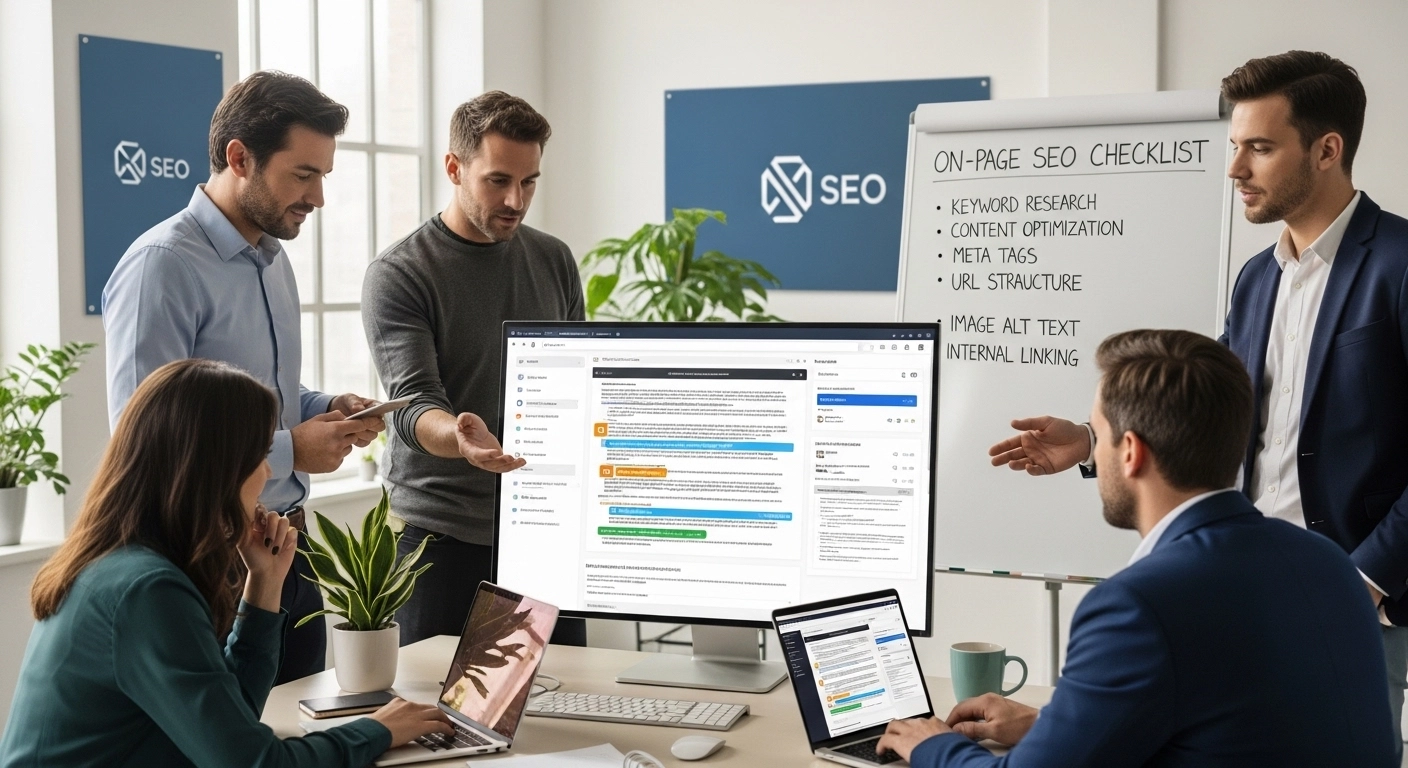
If your website isn’t ranking on Google despite publishing content regularly, the issue is often not your effort—it’s your on-page SEO strategy. A professional SEO agency on page SEO service focuses on optimizing every element within your website to improve visibility, relevance, and user experience.
On-page SEO is the foundation of search engine success. It ensures your content is properly structured, keyword-optimized, and aligned with search intent. From title tags and meta descriptions to content quality and internal linking, every detail plays a critical role in rankings.
In this guide, you’ll discover how a SEO agency on page SEO works, what strategies they use, and how to fully optimize your website for higher rankings, better engagement, and long-term organic growth.
What Is SEO Agency On Page SEO?
A SEO agency on page SEO refers to professional services that optimize website pages to rank higher in search engines and attract relevant traffic.
Core Elements of On-Page SEO
Content Optimization
Ensuring content is relevant, valuable, and aligned with user intent.
HTML Tag Optimization
Optimizing title tags, meta descriptions, headers, and schema markup.
User Experience (UX)
Improving readability, structure, and engagement signals.
Keyword Targeting
Strategically placing keywords without over-optimization.
Why On-Page SEO Matters for Rankings
On-page SEO directly impacts how search engines understand and rank your content.
Key Benefits of On-Page SEO
- Improved keyword rankings
- Higher click-through rates (CTR)
- Better user engagement
- Lower bounce rates
- Increased organic traffic
How Google Evaluates On-Page SEO
Search engines analyze:
- Content relevance
- Keyword usage
- Page structure
- User experience signals
- Content depth and quality
Complete On-Page SEO Checklist Used by Agencies
Title Tag Optimization
H4: Best Practices for Title Tags
- Include primary keyword naturally
- Keep length between 50–60 characters
- Add power words to improve CTR
- Avoid keyword stuffing
Meta Description Optimization
H4: Writing High-Converting Meta Descriptions
- Keep it under 160 characters
- Include primary and secondary keywords
- Add a compelling call-to-action
- Match search intent
Header Tag Structure (H1–H6)
H4: Proper Heading Hierarchy
- Use one H1 tag per page
- Include keywords in H2 and H3 tags
- Maintain logical structure
- Improve readability and SEO
URL Optimization
H4: SEO-Friendly URL Structure
- Keep URLs short and descriptive
- Include target keyword
- Avoid unnecessary parameters
- Use hyphens instead of underscores
Content Optimization Strategy
H3: Keyword Placement Strategy
A SEO agency on page SEO approach ensures keywords are placed in:
- Title tag
- Meta description
- First 100 words
- Headings (H2, H3)
- Image alt text
H3: Semantic SEO & NLP Optimization
Modern SEO requires more than keywords.
Agencies optimize for:
- Related terms (LSI keywords)
- Synonyms and variations
- Topic relevance
- Entity-based SEO
Advanced On-Page SEO Techniques
Internal Linking Strategy
H4: How to Build Powerful Internal Links
- Link to relevant pages
- Use keyword-rich anchor text
- Create topic clusters
- Improve crawlability
Image Optimization
H4: Image SEO Checklist
- Use descriptive file names
- Add alt text with keywords
- Compress images for speed
- Use modern formats (WebP)
Page Speed Optimization
H4: Core Web Vitals Optimization
- Improve loading speed
- Reduce JavaScript
- Optimize server response time
- Use caching and CDN
Mobile Optimization
H4: Mobile SEO Best Practices
- Responsive design
- Fast loading on mobile
- Easy navigation
- Readable content
On-Page SEO Strategy Framework (Step-by-Step)
Step 1: Keyword Research
H4: Keyword Research Process
- Identify primary keyword
- Find long-tail keywords
- Analyze competitors
- Map keywords to pages
Step 2: Search Intent Optimization
Understanding user intent is critical.
Types of intent:
- Informational
- Navigational
- Transactional
- Commercial
Step 3: Content Creation
H4: High-Quality Content Framework
- Write for users first
- Answer search queries clearly
- Use structured headings
- Add value and depth
Step 4: On-Page Optimization
Apply all technical and content optimizations:
- Tags
- Content
- Links
- Images
Step 5: Continuous Improvement
SEO is ongoing.
H4: Optimization Cycle
- Update content regularly
- Improve CTR
- Add internal links
- Track rankings
How to Choose the Best SEO Agency for On Page SEO
Key Factors to Consider
Experience and Expertise
Look for agencies with proven results in on-page SEO.
Transparent Strategy
They should explain their optimization process clearly.
Data-Driven Approach
Decisions must be based on analytics, not assumptions.
Custom SEO Plans
Avoid one-size-fits-all strategies.
Common On-Page SEO Mistakes to Avoid
- Keyword stuffing
- Duplicate content
- Poor internal linking
- Missing meta tags
- Slow page speed
- Ignoring mobile optimization
Avoiding these mistakes can significantly improve rankings.
Future of On-Page SEO
AI and Search Engines
Search engines are becoming smarter with AI.
Focus areas:
- Content quality
- User intent
- Contextual relevance
Voice Search Optimization
Optimize for natural language queries like:
- “What is on-page SEO?”
- “Best SEO agency for on-page SEO?”
E-E-A-T Optimization
Google prioritizes:
- Experience
- Expertise
- Authority
- Trust
Frequently Asked Questions
What is on-page SEO in simple terms?
On-page SEO is the process of optimizing elements within your website—such as content, headings, and meta tags—to improve search engine rankings.
Why should I hire an SEO agency for on-page SEO?
An SEO agency provides expertise, tools, and proven strategies to optimize your website effectively and improve rankings faster.
How long does on-page SEO take to work?
Results typically appear within 4–12 weeks, depending on competition and website quality.
What is the most important on-page SEO factor?
Content quality and relevance are the most important factors, followed by proper keyword optimization and user experience.
How many keywords should I target per page?
Focus on one primary keyword and several related keywords to maintain clarity and relevance.
Does on-page SEO guarantee rankings?
No, but it significantly increases your chances of ranking higher when combined with off-page SEO and technical SEO.
Can I do on-page SEO myself?
Yes, but hiring a professional SEO agency ensures better results, faster optimization, and fewer mistakes.
Conclusion
A strong SEO agency on page SEO strategy is essential for achieving higher rankings, better visibility, and sustainable organic growth. By optimizing content, improving technical elements, and aligning with search intent, businesses can significantly outperform competitors.
Whether you’re managing a small website or a large platform, investing in on-page SEO ensures your content is fully optimized for both users and search engines.
If you want consistent traffic, higher conversions, and long-term success, mastering on-page SEO—or partnering with the right agency—is the key.
