
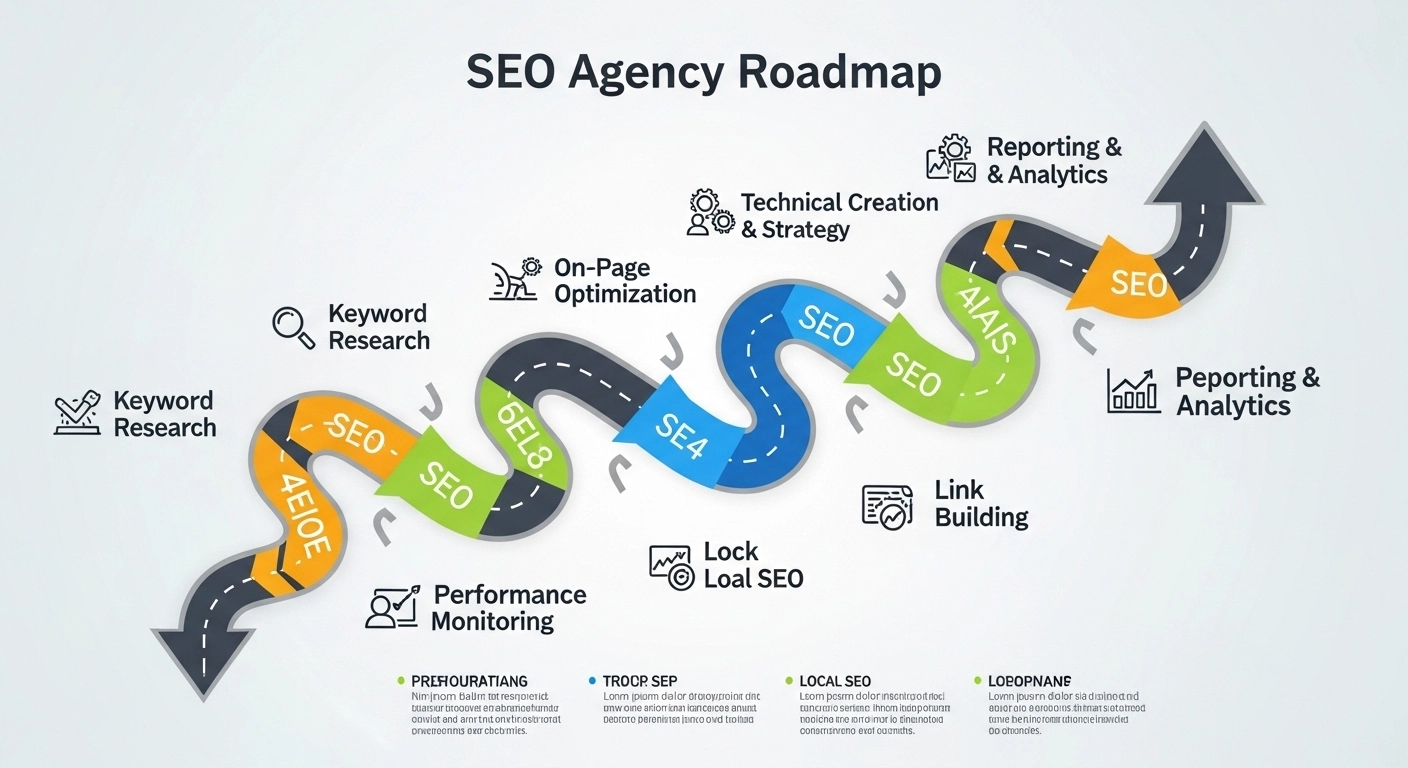
If you want consistent organic growth, random SEO tactics won’t cut it—you need a structured plan. That’s where a SEO agency SEO roadmap becomes essential. It provides a clear, step-by-step framework that aligns strategy, execution, and measurable results.
A well-defined SEO roadmap ensures that every action—from technical fixes to content creation—is prioritized based on impact. Whether you’re a business owner or working with an agency, understanding a proven SEO roadmap helps you scale rankings, traffic, and revenue efficiently.
In this guide, you’ll discover a complete, expert-level SEO roadmap used by top agencies to dominate search results, improve visibility, and future-proof your SEO strategy.
What Is an SEO Agency SEO Roadmap?
An SEO agency SEO roadmap is a strategic plan that outlines:
- SEO goals and KPIs
- Priority tasks and timelines
- Technical, on-page, and off-page strategies
- Content and keyword planning
- Performance tracking systems
It acts as a blueprint for long-term SEO success, ensuring that efforts are aligned with business goals and search engine algorithms.
Why an SEO Roadmap Matters
Without a roadmap, SEO becomes:
- Unstructured
- Inefficient
- Difficult to scale
- Hard to measure
With a roadmap, you get:
- Clear direction
- Faster results
- Better ROI
- Scalable growth
Key Phases of an SEO Agency SEO Roadmap
A successful SEO roadmap is built in phases, each designed to maximize impact and efficiency.
Phase 1: SEO Audit & Website Analysis
Before implementing any strategy, agencies perform a deep audit.
H3: Technical SEO Audit
Analyzes:
- Crawl errors
- Indexing issues
- Site speed
- Mobile usability
- Core Web Vitals
H3: Content Audit
Evaluates:
- Content quality
- Keyword targeting
- Content gaps
- Duplicate content
H3: Backlink Audit
Reviews:
- Domain authority
- Toxic backlinks
- Link profile strength
H4: Actionable Audit Checklist
- Identify critical technical errors
- Fix indexing and crawlability issues
- Remove or disavow toxic links
- Optimize low-performing content
- Benchmark competitors
Phase 2: Keyword Research & Search Intent Mapping
Keyword research is the foundation of any SEO roadmap.
H3: Keyword Clustering Strategy
Instead of targeting single keywords, agencies group keywords into clusters:
- Primary keywords
- Secondary keywords
- Long-tail variations
- Semantic keywords
H3: Search Intent Optimization
Each keyword is mapped to intent:
- Informational
- Navigational
- Transactional
- Commercial
H4: Keyword Mapping Framework
- Assign keywords to specific pages
- Avoid keyword cannibalization
- Align keywords with user intent
- Build topic clusters
Phase 3: Technical SEO Implementation
Technical SEO ensures your website is accessible and optimized for search engines.
H3: Site Architecture Optimization
- Create logical URL structures
- Improve internal linking
- Optimize navigation
H3: Core Web Vitals Optimization
- Improve page speed
- Reduce layout shifts
- Enhance interactivity
H3: Indexation & Crawl Control
- Optimize robots.txt
- Manage XML sitemaps
- Use canonical tags properly
H4: Technical SEO Execution Plan
- Fix broken links and redirects
- Optimize site speed
- Implement schema markup
- Ensure mobile-first indexing
Phase 4: Content Strategy & Creation
Content drives organic visibility and authority.
H3: Topic Cluster Strategy
Build authority using:
- Pillar pages
- Supporting articles
- Internal linking
H3: SEO Content Optimization
Each piece of content should include:
- Primary keyword placement
- NLP keywords
- Semantic variations
- Optimized headings
H3: Programmatic SEO (Advanced)
Scale content with:
- Automated landing pages
- Dynamic content generation
- Data-driven page creation
H4: Content Creation Workflow
- Keyword research
- Content brief creation
- Expert writing
- SEO optimization
- Publishing
- Internal linking
Phase 5: On-Page SEO Optimization
On-page SEO ensures each page is fully optimized.
H3: Core On-Page Elements
- Title tags
- Meta descriptions
- Header tags (H1–H6)
- Image optimization
- Internal linking
H3: User Experience Optimization
- Improve readability
- Reduce bounce rate
- Enhance engagement
H4: On-Page SEO Checklist
- Use keyword in title and H1
- Optimize meta descriptions
- Add internal links
- Improve content structure
- Optimize images with alt text
Phase 6: Link Building & Authority Growth
Off-page SEO builds credibility and trust.
H3: High-Quality Backlink Strategy
Focus on:
- Authority websites
- Relevant niches
- Natural link acquisition
H3: Digital PR Campaigns
Earn links through:
- Data studies
- Industry insights
- News features
H4: Link Building Framework
- Identify link opportunities
- Outreach to relevant sites
- Publish link-worthy content
- Monitor backlink profile
Phase 7: Performance Tracking & Reporting
SEO success depends on measurable results.
H3: Key SEO Metrics
Track:
- Organic traffic
- Keyword rankings
- Conversion rates
- Bounce rate
- Backlink growth
H3: SEO Reporting Dashboards
Use dashboards to:
- Monitor performance
- Identify issues
- Adjust strategy
H4: Monthly SEO Reporting Process
- Analyze traffic trends
- Review keyword rankings
- Evaluate content performance
- Adjust roadmap priorities
Phase 8: Continuous Optimization & Scaling
SEO is an ongoing process.
H3: Content Updates & Refresh
- Update outdated content
- Improve rankings
- Add new information
H3: Scaling SEO Efforts
- Expand keyword targeting
- Launch new content clusters
- Automate processes
H4: Growth Scaling Strategy
- Identify high-performing pages
- Replicate success patterns
- Expand into new niches
SEO Roadmap Timeline (Typical Agency Plan)
A typical SEO roadmap timeline looks like:
- Month 1: Audit & research
- Month 2–3: Technical fixes & content planning
- Month 3–6: Content creation & link building
- Month 6+: Scaling and optimization
Common Mistakes in SEO Roadmaps
Avoid these critical errors:
- No clear prioritization
- Ignoring technical SEO
- Poor keyword mapping
- Thin content
- Lack of tracking
- Inconsistent execution
Benefits of Following an SEO Agency Roadmap
Predictable Growth
A structured roadmap ensures consistent SEO progress.
Better ROI
Focus on high-impact activities first.
Scalable Strategy
Easily expand SEO efforts as your business grows.
Competitive Advantage
Outperform competitors with a data-driven approach.
Frequently Asked Questions
What is an SEO agency SEO roadmap?
An SEO agency SEO roadmap is a structured plan that outlines SEO strategies, priorities, and timelines to improve search rankings and organic traffic.
How long does an SEO roadmap take to show results?
Most SEO roadmaps show results within 3–6 months, with significant growth after 6–12 months.
What should be included in an SEO roadmap?
It should include:
- SEO audit
- Keyword research
- Technical SEO
- Content strategy
- Link building
- Performance tracking
Why is keyword mapping important in an SEO roadmap?
Keyword mapping ensures that each page targets the right keywords, avoiding duplication and improving ranking efficiency.
Can small businesses use an SEO roadmap?
Yes. While enterprise strategies are more complex, small businesses can adapt SEO roadmaps to scale their growth effectively.
How often should an SEO roadmap be updated?
An SEO roadmap should be reviewed and updated monthly or quarterly based on performance data and algorithm changes.
What tools do SEO agencies use for roadmaps?
Common tools include:
- Keyword research tools
- SEO audit tools
- Analytics platforms
- Rank tracking software
Conclusion
A well-structured SEO agency SEO roadmap is the foundation of successful search engine optimization. It transforms scattered efforts into a clear, strategic plan that drives measurable results.
By following a phased approach—starting with audits, moving through keyword research, technical optimization, content creation, and continuous improvement—businesses can achieve sustainable growth and long-term visibility.
In today’s competitive digital landscape, having a roadmap isn’t optional—it’s essential. Whether you’re working with an agency or building your in-house strategy, a powerful SEO roadmap will help you scale faster, rank higher, and stay ahead of algorithm changes.
Meta Description
Discover a complete SEO agency SEO roadmap with proven strategies, step-by-step phases, and expert tips to boost rankings, traffic, and long-term SEO growth.
